
Tacitura engineering services launching early 2027 · Conversations and collaborations now welcome
Make Engineering Deliver Faster
Tacitura helps engineering organisations find where time and capability are being lost across product development, then redesign the workflows and decision processes behind them to reduce delay, rework and dependency on individual expertise.
Unlock your engineering records
Understand how the work really happens
Scale the judgement that makes the difference
Ultimately increase engineering capacity without proportionally increasing headcount.
Reduce Delay
Find lost time and hand-off friction
Reduce Rework
Expose root causes of late and expensive engineering change
Scale Judgement
Make expert decision logic and know-how reusable
AI that Augments your Team
Prepare the engineering process before adding technology
Your engineering system already contains the clues
Product change, NPI documentation, validation & simulation records and part issue records contain evidence about how engineering actually happens.
Tacitura identifies and analyses existing engineering information to identify patterns of delay, rework, recurrence and late intervention, then uses those findings to focus deeper investigation on the workflows and decisions that matter.
01 · RECORDS
What the evidence tells us
Analyse semi-structured engineering records to identify patterns of delay, recurrence, rework, escalation and late intervention.
Product change · NPI · Issues · Validation · Simulation
02 · WORKFLOW
How the work really happens
Map activities, decisions, hand-offs, simulation, reviews and approvals to expose where the formal process and real delivery system diverge.
Decisions · Reviews · Handoffs · Dependencies · Rework
03 · JUDGEMENT
Why experienced engineers decide
Articulate the evidence, assumptions, trade-offs, experience and confidence behind critical decisions that ordinary records leave implicit.
Evidence · Confidence · Assumptions · Options · Decisions
Understand the system before trying to transform it.
Turn engineering records into delivery insight.
Product change, NPI, validation, simulation and issue records contain evidence about where development time is being lost. Tacitura uses that evidence to focus investigation on the workflows and decisions that matter most.
Find recurring delay and rework
Identify late discovery and escalation patterns
Focus expert conversations on evidence, not opinion
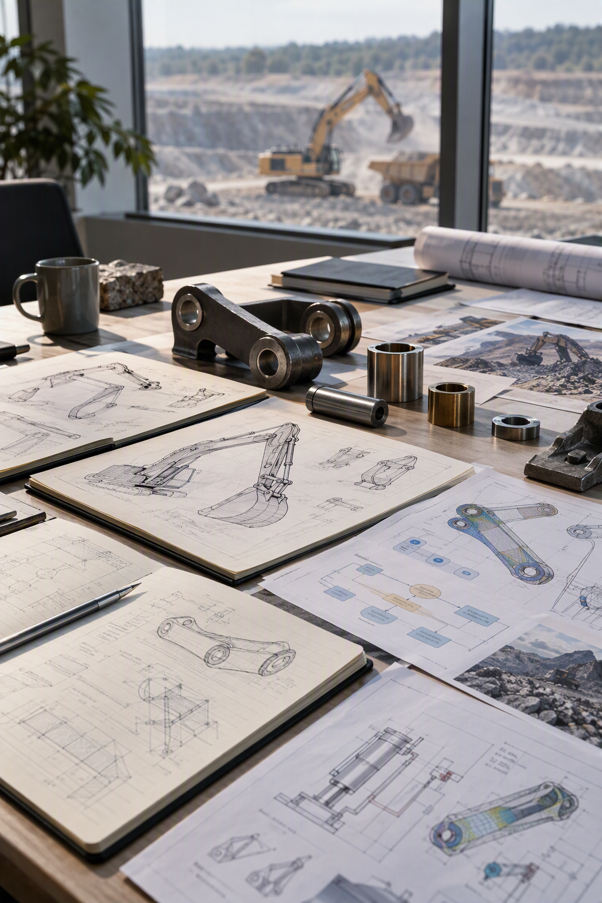
How the work really happens
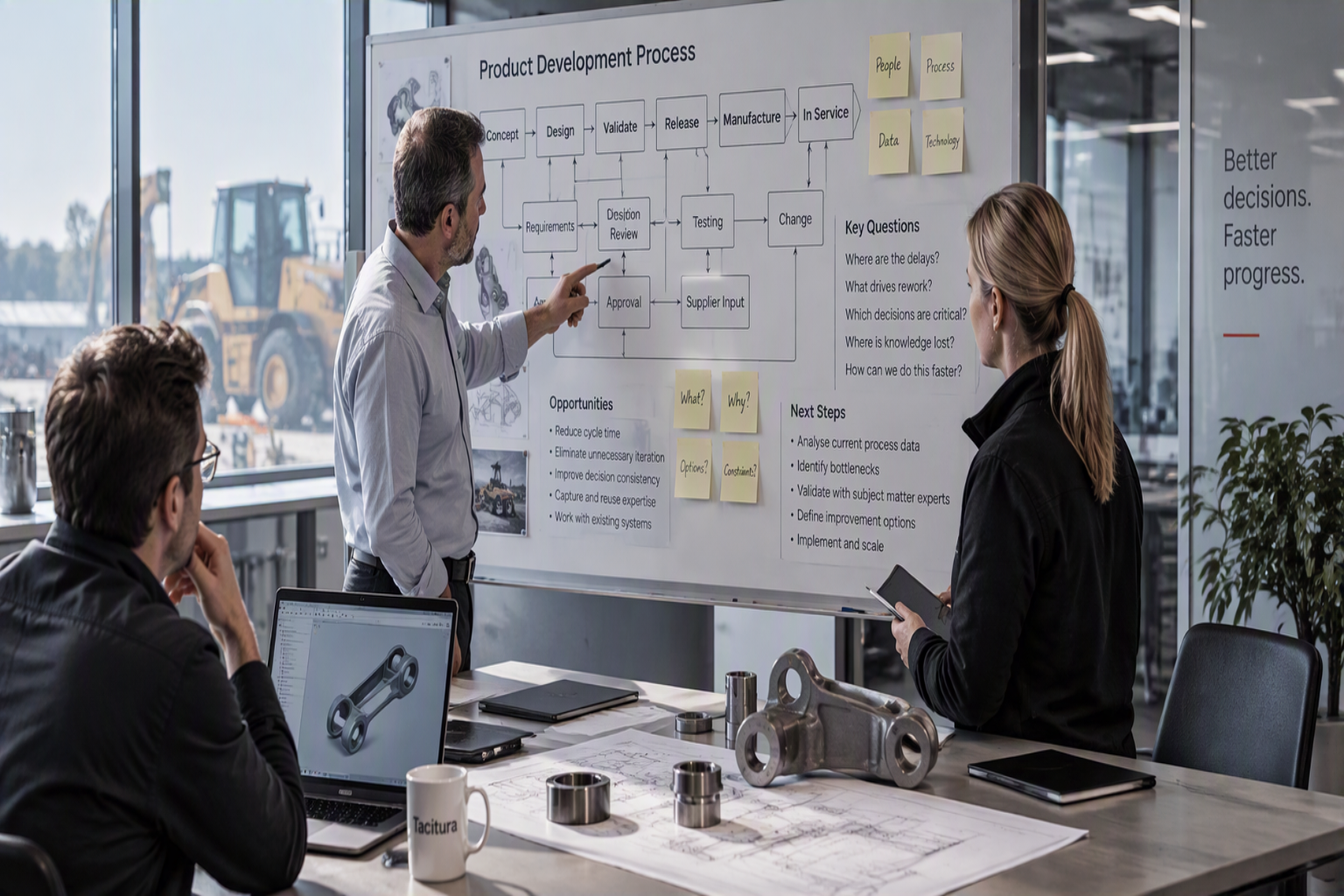
Understanding and making processes more efficient
We use that evidence to identify bottlenecks, unnecessary iteration and opportunities to create faster, more resilient engineering workflows using your existing technology wherever practical.
Tacitura can work independently or alongside your internal teams, technology providers and specialist delivery partners.
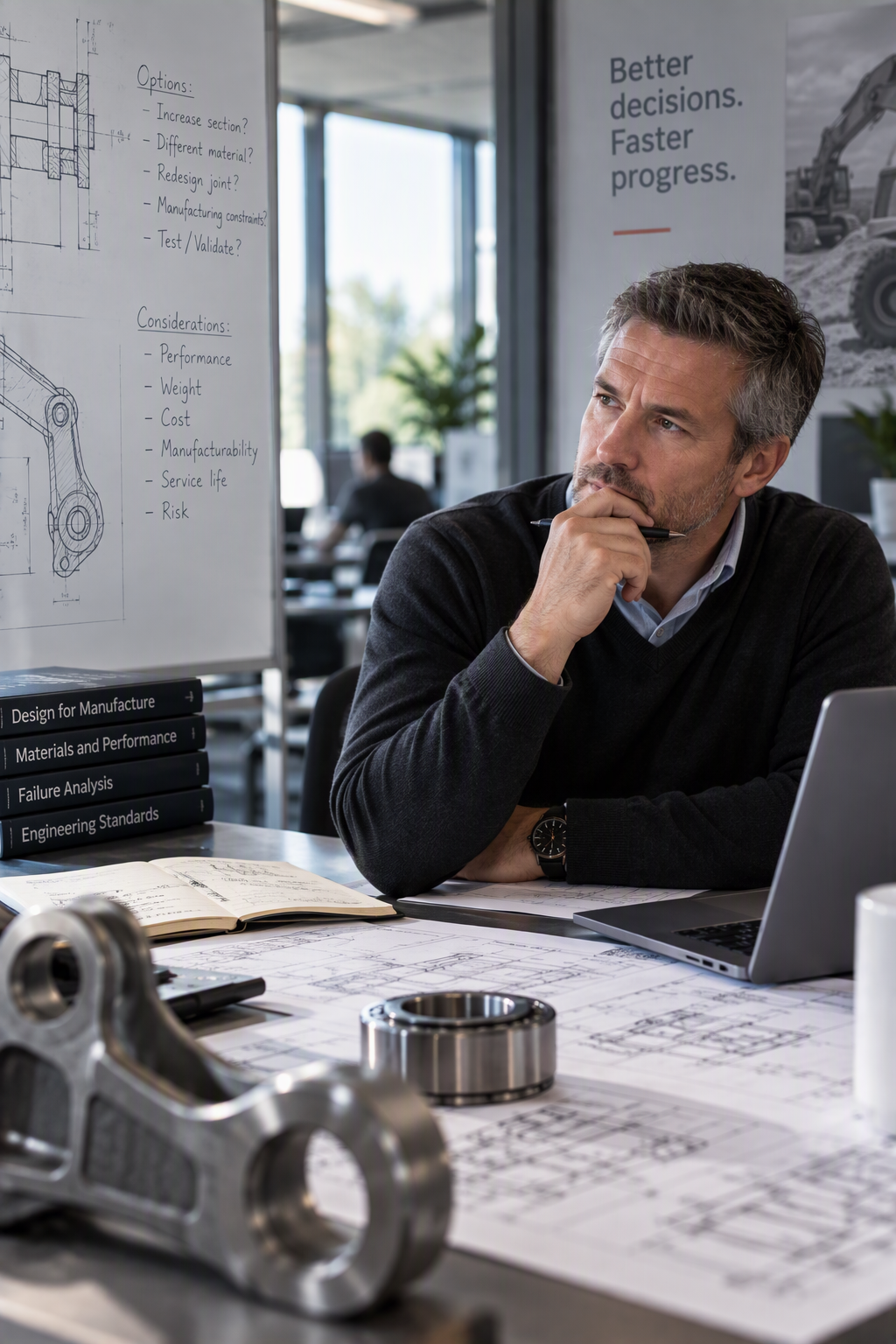
Some of your most important engineering decisions aren't in your systems.
The result is dependency on individuals.
Experienced engineers don't just know facts. They understand which evidence matters, which assumptions are dangerous, what alternatives have failed before and when there is enough confidence to proceed.
Tacitura helps articulate this judgement and embed the valuable parts into engineering workflows, decision support, training and future AI-enabled systems.
Services Portfolio
Engineering Delivery Diagnostic
Find where engineering time is being lost and what to do about it.
A focused review of engineering records, workflows and critical decision points to identify recurring delay, rework, late intervention and dependency on scarce expertise.
Outputs include:
evidence of where delivery performance is being lost;
the workflow and decision factors behind it;
practical priorities for process improvement, capability development, automation or AI.
Strategic Advisory
Independent senior engineering perspective for difficult technology, capability and transformation decisions.
Support for engineering leaders and boards addressing simulation strategy, AI adoption, engineering capability, technical governance and product-development transformation.
Available for a defined challenge or as ongoing advisory support.
Speaking Engagements
Briefings, workshops and training
Available for engineering leadership and technical teams, particularly around simulation, AI adoption, engineering judgement and capability development.
Tacitura works with internal teams and specialist technology partners where implementation requires additional capability.
Planning an engineering transformation for 2027?
I'm currently speaking with engineering leaders about challenges involving development time, simulation, engineering capability and AI.
Start a conversation by email, phone or LinkedIn
Senior engineering experience behind Tacitura
Tacitura was founded by former JCB Chief Engineer Dr David Panni CEng FIMechE after seeing engineering organisations struggle to reduce development time while also trying to understand what AI means for engineering and where it can create practical value.
His work spans product development, simulation, engineering capability, technical leadership and the practical application of emerging technologies such as AI to complex engineering organisations.
That combination matters because engineering transformation is rarely just a technology problem. It requires understanding how products are developed, how engineers make decisions and where organisational processes help or obstruct delivery.
As Chair of the UK NAFEMS Steering Committee, David brings a broad perspective on developments and emerging practice across the engineering simulation community.
He also brings six years’ Non-Executive Director experience with The Welding Institute, including Audit, Finance & General Purposes and Remuneration Committee responsibilities.
Clients therefore gain senior engineering judgement combined with practical understanding of workflow, simulation, organisational capability and emerging technology.